For teams, leagues and rights holders
We carry the rooms, so a fan who decides in the last week costs you nothing.
Sports audiences buy later than anyone else we sell to. Nothing is contracted in your name, there’s no cut-off date to chase, and the package is built on a live seat map rather than a price tier.
Schedule a demoSuperMotocross Finals — Las Vegas
One event, 2025. Every ticket a specific seat, sold from seven months out to four days before.
One in five packages sells inside the final month
Across the sports events we run, the median package is bought 92 days out against 141 for a festival — and nearly four times as many land in the last thirty days. For a knockout fixture it’s more extreme: every package for the 2025 Gold Cup Final sold inside the final fifteen days, because until the semi-final nobody knew who was playing.
There’s nothing to sign months ahead of that demand and nothing to hand back if it doesn’t arrive.
Fans don’t buy a ticket. They buy that seat.
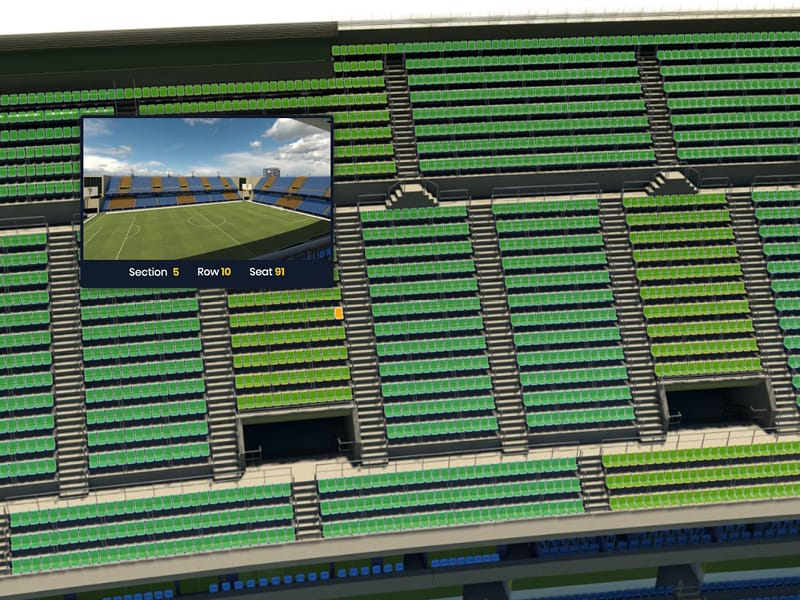
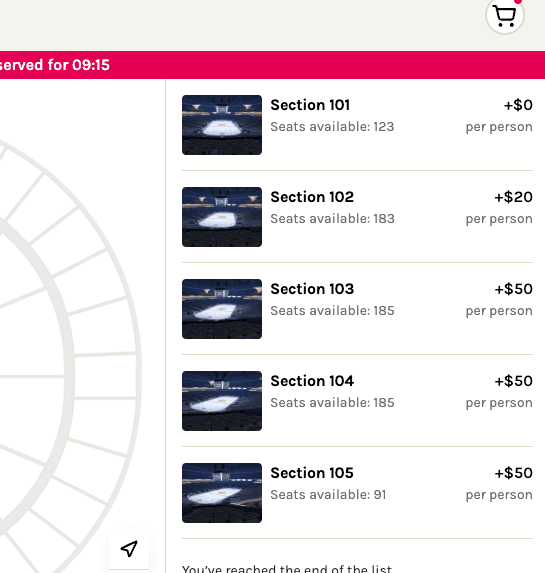
The package is built on a live seat map. The fan picks the actual seat, sees the view from it, and the room and the ride price alongside it in the same basket.
At last year’s SuperMotocross final, 190 seats sold across nineteen different sections of the stadium, and no single section took more than a fifth of them. Buyers spread right across the map, and the ones who chose better seats bought bigger packages around them.
Sometimes the hotel is the event
Take a race to a closed course an hour from anywhere and the fan’s problem stops being the ticket. On a first-year event in exactly that position last June, the average package was over $3,000 and more than three quarters of it was the hotel — because there was nowhere obvious to stay and nobody had solved it.
If you’re taking a fixture somewhere new, or somewhere the local supply can’t absorb the crowd, that’s the version of this that matters most.
One structure, however many dates you have
A full season, a tournament bracket or a single marquee fixture all run on the same package structure. Premier Lacrosse League’s 2026 season is set up across sixteen stops on one configuration, and last year’s Gold Cup had packages live for all twenty-two matches across thirteen cities before anyone knew which teams would reach them.
- One structure per property, repriced per market and per date
- Adding or dropping a fixture is a configuration change
- Live inventory, so a sold-out property drops out rather than overselling
- One booking flow and one support line for the fan, wherever they’re traveling
- Keep 100% of ticket revenue — we earn on the travel side
We’ll tell you which of your dates carry travel demand
Neutral-site games. Finals and championships. Races and endurance events. Anything in a market with fewer rooms than the event brings people.
A regular home fixture, where most of the crowd drives back the same night, doesn’t need a hotel program and we won’t pretend otherwise. Send the fixture list and we’ll tell you which dates are worth it before you commit to anything.
FAQs
It’s the reason to do it. One in five packages we sell for a sports event is bought in the final month, and for knockout fixtures it’s effectively all of them. There’s no block to contract and no minimum to hit, so late demand costs you nothing and demand that never arrives costs you nothing either.
No. No room block, no minimum, no attrition clause. We source and carry the hotel inventory.
We earn on the travel side — the room, the transport, the add-ons. That revenue currently goes to hotels and booking sites, and it funds the whole program without touching your ticket price or your ticket revenue.
All of it. Your ticket price, your ticket revenue, your relationship with your ticketing provider.
Either. One structure covers a season, a bracket or a single fixture. In practice we’ll usually recommend starting with the dates that carry travel demand rather than switching the whole calendar on at once.
Trusted across festivals, tours, sports, conferences and trade shows













See it against your fixture list
Thirty minutes and your schedule. You'll leave knowing which of your dates carry real travel demand, roughly what the rooms are worth, and what it would take to launch.